Roofing debris removal FAQs help homeowners, contractors, and property managers plan a safer cleanup. Roofing debris can include shingles, underlayment, flashing, nails, and damaged wood. The amount of waste, its location, and local disposal options all shape the job. Knowing these details helps keep the property clear and the roof project on track.
Table of Contents
- What materials count as roofing debris?
- How much does roofing debris removal cost?
- When should roofing debris be removed?
- How is roofing debris sorted and disposed of?
- How can you keep a property safe during roofing cleanup?
- Can roofing debris be removed from a commercial job site?
- How do you choose a roofing debris removal service?
- Frequently Asked Questions
What materials count as roofing debris?
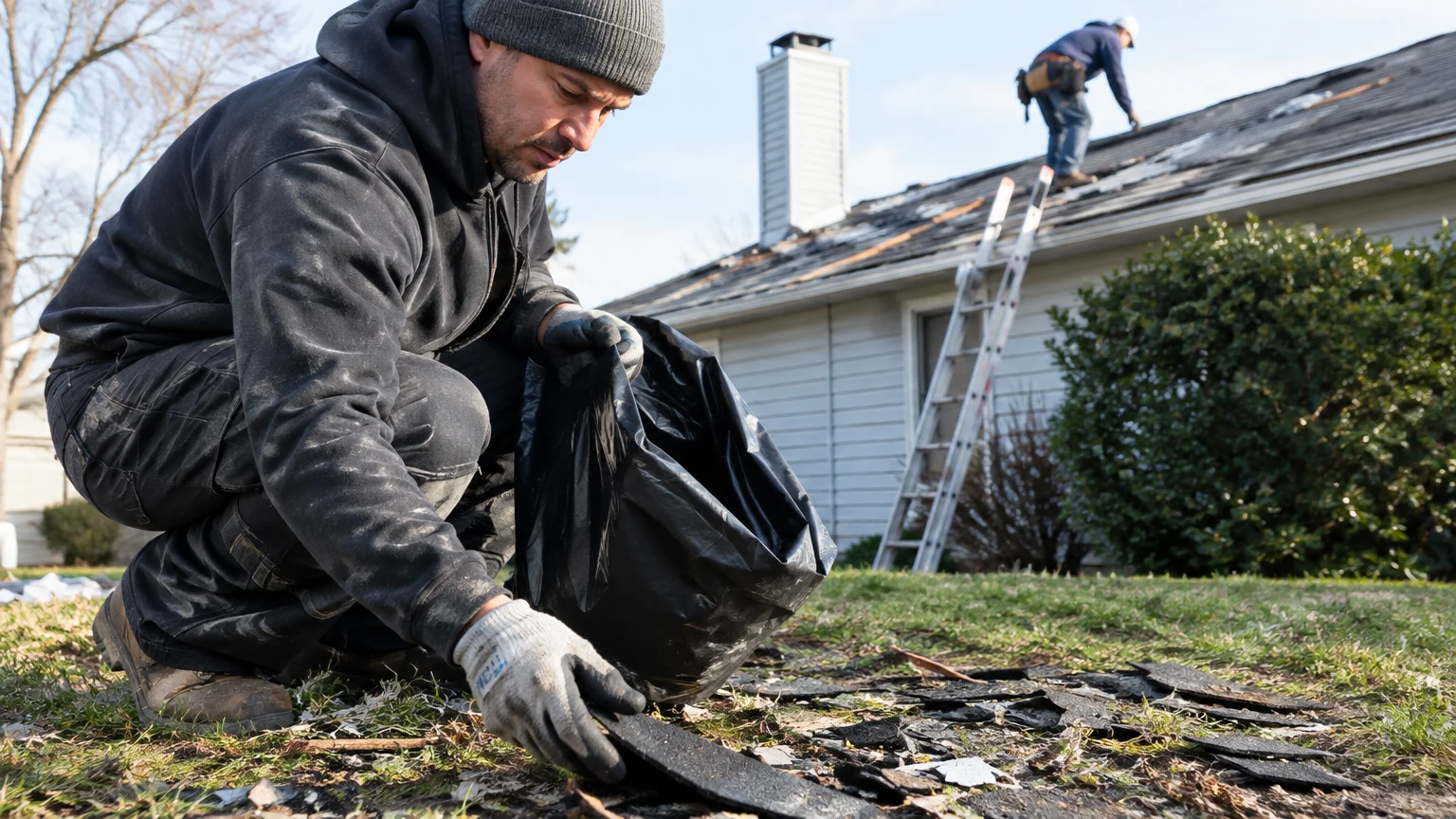
Roofing debris is the old material taken off during roof repair or replacement. It often includes shingles, underlayment, nails, flashing, and damaged roof edges. A cleanup may also include wood decking, roof vents, or old gutters if the project removes them.
Underlayment is a layer that sits beneath the roof covering. Flashing is a thin piece of material placed around roof joints, vents, and chimneys. It helps keep water out. These materials may need different handling, so the cleanup crew should know what the roof work has produced.
Roof tear-off waste is different from general construction debris because it comes from the roof. It may have sharp edges or loose nails, and a pile of shingles can be heavy and hard to move. Drywall, cabinets, and flooring may be part of the same renovation, but they are separate waste types. Mention them when arranging cleanup.
A small repair may leave a few shingles and some flashing. Replacing a whole roof can create a much larger pile, with underlayment and damaged wood as well. A clear list of the materials helps the crew plan how to remove them. It can also point out items that need separate handling.
New Port Richey Junk Removal can help homeowners and contractors plan for roofing tear-off waste. Share what roof work was done, what materials are in the pile, and where it is set. This can help with projects in New Port Richey, including Downtown New Port Richey and Gulf Harbors, as well as Port Richey, Trinity, Holiday, and Elfers. Parking, access, and disposal choices can differ by site.
If the project has other renovation waste, mention it before the cleanup is planned. This could include concrete chunks, appliances, or old furniture. These items are not roofing debris, but a full-service junk removal company may be able to discuss a separate or combined cleanup plan.
How much does roofing debris removal cost?
The final cost depends on the amount and type of debris, how easy it is to reach, and the available disposal options. Shingles and wood can be heavy and bulky, so roofing cleanup may differ from a smaller indoor cleanup. The final cost is confirmed on a quote after the job details are reviewed.
A small pile beside a clear driveway is not the same as loose debris spread around a building. A pile behind a fence may also take more work to reach. Sorting, long carries, limited truck access, and mixed renovation waste can affect the work involved.
The type of debris matters along with the amount. Clean materials kept apart may be easier to handle than a pile mixed with household trash, wet insulation, or broken wood. A full roof replacement may leave more waste than a small patch job. Difficult access can add work even when the pile is not large.
When you compare roofing cleanup with other construction debris removal, consider weight and handling needs as well as pile size. A small amount of light packaging is different from a dense pile of shingles or concrete. Ask whether the service accepts each material and whether the planned pickup covers the whole pile.
For a useful quote, share the type of roof work, the materials, and where the pile is located. Photos can help if the service accepts them, but they do not show every access issue. The crew may still need to review the location and material types. The final cost cannot be confirmed without understanding the job.
This planning can also help contractors avoid delays after the roof work ends. Say whether the debris is in a driveway, on a lawn, or near a busy entrance. If the pile includes appliances or furniture from a larger renovation, describe those items too. The crew can then understand the full cleanup request.
When should roofing debris be removed?
Remove roofing debris when the work area is safe and the crew can reach the pile. Some jobs need cleanup while roof work is underway. Others are best cleared after the last roofing task. The roofing contractor and removal crew can agree on timing based on safety and access.
A planned pickup can help keep paths, driveways, and work areas clear. For a larger roof replacement, the roofing crew may gather debris in one set place as work continues. This can make the final cleanup easier. The pile must not block workers, residents, or equipment.
A pickup after the project may work well for a small repair or a site where the crew needs room. First, the roofing contractor should make sure tear-off work is done and loose material is gathered. Do not set a pickup while workers are still moving debris through the same area.
Weather, access, and changes to the project can affect the plan. Rain may make some materials harder to handle. Parked vehicles or a blocked driveway can limit truck access. Extra work may also create materials that were not part of the first cleanup request.
For a smooth handoff, the contractor can point out the pickup area and tell residents or tenants when access is needed. Keep the pile away from doors, paths, and parking spaces when possible. At a shared site, let people know which area needs to stay clear during removal.
New Port Richey Junk Removal can coordinate roofing debris removal once the project team knows what is ready. A quick check of the pile and access path can help everyone agree on a useful pickup time. Keep loose nails and sharp scraps away from places where workers, residents, or pets may walk.
How is roofing debris sorted and disposed of?
Roofing debris can be sorted by material when the job and local disposal options allow it. Shingles, metal flashing, wood, and mixed waste may each need different handling. Ask the removal provider which materials it accepts and how it plans to handle the load.
Some materials may be recycled or recovered, while others may need to be thrown away. The choices depend on the material’s condition, nearby facilities, and local rules. Do not assume that every shingle, piece of metal, or roofing product can go in the same bin.
Keep roofing debris apart from household trash when possible. Do not mix in paint, chemicals, or other items that may need special care. If the project includes old appliances, ask how those are handled separately. Local rules and accepted services may differ from those for roofing cleanup.
The age and condition of the materials can matter too. Wet, broken, or mixed debris may need more care than a clean pile of separated shingles. If the contractor thinks a material may be hazardous, do not treat it as ordinary junk. Stop handling it and ask a qualified professional what to do next.
Disposal rules vary from place to place. A service that knows New Port Richey and Florida can explain what it accepts for a specific job. Share details before pickup, especially if the pile contains roofing products beyond common shingles, underlayment, or metal flashing.
Clear sorting helps the crew choose a safer way to handle the load. It can also prevent mix-ups when a pile has other renovation waste. Before the cleanup, the provider should explain what it accepts and any limits that apply.
How can you keep a property safe during roofing cleanup?
Keep people away from the active work area and debris pile until the roofing crew says it is safe. Shingles can hide nails, and broken wood or metal edges can cut skin. A clear boundary helps protect residents, workers, customers, and pets during cleanup.
Move cars, bins, and outdoor items away from the planned work area. Tell the crew about narrow paths, soft ground, plants, or places where a truck cannot turn safely. These details can help prevent harm to driveways, lawns, and garden areas.
Homeowners can do simple checks and care that do not involve climbing or touching sharp debris. Keep people and pets away, clear small items from the access path, and tell the contractor about hazards. You do not need a removal professional just to keep the area clear or share access details.
A professional should handle heavy piles, sharp tear-off waste, and materials that may be hazardous. Do not climb onto a roof, reach into the debris, or try to move a heavy load by hand. If nails or sharp scraps are scattered, keep others away and ask the roofing crew how to make the area safe.
Before pickup, agree on where the crew can park and where the debris is placed. Keep doors, fire exits, sidewalks, and business entrances open when possible. If the pile is near a public path, use a safe barrier approved for the site. Do not leave loose material exposed.
After removal, look at the work area from the ground for scraps. The roofing contractor can say whether a final sweep is part of its work. Do not handle unknown materials or climb up to check the roof. Ask the contractor to look into any concern.
Can roofing debris be removed from a commercial job site?
Yes, roofing debris can be removed from many business sites when the materials, access, and pickup plan are clear. A good plan considers workers, tenants, customers, deliveries, and business hours. The site manager should share access rules before setting the pickup.
At an active job site, choose where the debris will be gathered and how the removal crew can reach it. Keep the pile away from loading areas, entrances, and paths used by workers or customers. If roof work is still underway, agree on a time that does not interrupt the crew.
Property owners and managers can plan around tenants too. A notice may help people move cars or avoid a work area for a short time. If the job needs a shared driveway or loading dock, confirm who can approve access and when it is open.
Before pickup, tell the service what materials are on site and how they are stored. Say whether the debris is loose, in bags, or in a container. Mention stairs, gates, or narrow lanes that may affect access. Accurate details help the crew prepare for the real job.
Contractors can make the handoff easier by keeping roofing debris apart from drywall, wood, concrete, and general trash. If the materials are mixed, describe the pile clearly. The service can then confirm whether it accepts the full load or needs another plan for some items.
A site manager should name one person who can answer access questions on pickup day. This helps when several crews or businesses share the property. With clear timing and a safe pickup area, roofing debris removal can fit around the site’s daily work.
How do you choose a roofing debris removal service?
Choose a service that can explain what roofing materials it accepts, how it handles access, and what it needs before pickup. Ask about shingles, underlayment, flashing, wood, and mixed renovation waste. A clear answer can help prevent a missed pickup or a pile the crew cannot take.
What should you ask before scheduling?
Ask how the service handles the materials at the site and whether it can reach the planned pickup area. Find out what details it needs about the pile, access, and timing. If the project includes concrete chunks or old furniture, ask whether those items need a separate plan.
Also check who will gather the debris and whether the roofing contractor must finish that work first. A removal service may have limits on some materials or unsafe loads. Clear questions make it easier to compare services and understand what each can handle.
What should you confirm on pickup day?
Make sure the pile is ready, the access route is open, and the right person can meet the crew if needed. Keep vehicles and people away from the work area. If the pile has changed since the service reviewed it, share the update before removal starts.
New Port Richey Junk Removal can help property owners, contractors, and remodelers plan roofing debris cleanup. For work in New Port Richey, describe the materials, point out access limits, and confirm the pickup plan. This gives the crew a clearer picture of the job before arrival.
Frequently Asked Questions
How do you get rid of old roof shingles?
Gather shingles in a safe, agreed-upon place after the roofing work is done. Keep them apart from household trash and tell the removal service what is in the pile. Disposal choices vary by area, so ask whether the provider accepts shingles and how it handles them.
Can roofing debris be removed during a roof replacement?
Yes, cleanup can happen during a roof replacement if the roofing crew and removal provider agree on safe timing and access. The pickup should not cross active work paths or block equipment. Some jobs are easier to clear after tear-off work ends and the debris is gathered.
Can homeowners remove roofing debris themselves?
Homeowners can keep people and pets away, clear a safe path, and share details about the site. They should not climb onto the roof or handle heavy piles, sharp shingles, or unknown materials. A professional is the safer choice for lifting, loading, and removing tear-off waste.
Can shingles and metal flashing go in the same load?
They may be collected together, but sorting choices depend on the service and local disposal sites. Ask the provider before mixing the materials. Keeping metal flashing apart from shingles can make the pile easier to identify and may help the crew choose how to handle it.
What information helps arrange roofing debris removal?
Share the type of project, the materials, the pile’s size and location, and any access limits. Mention whether other renovation waste is included. These details help the service decide whether it can accept the load and what should be ready before pickup.
Key takeaways
- Roofing debris may include shingles, underlayment, flashing, nails, and damaged wood.
- The material, amount, access, and disposal options shape the cleanup plan and quote.
- Plan pickup when the roof crew can provide safe access to a ready pile.
- Keep people and pets away from sharp debris; do not climb or lift heavy loads.
- Ask the removal service what it accepts and how it handles each material.
Conclusion
A clear cleanup plan helps protect people and keeps roof work moving. Identify the materials, choose a safe pickup area, and share access details before removal. Local rules and accepted materials can vary, so confirm the plan with the service before the project ends.
Contact us to arrange roofing debris removal for your project.