Mattress disposal in New Port Richey starts with checking the mattress, local rules, and how you can move it. A clean mattress may be accepted for reuse, while a worn one may need recycling or approved hauling. Ask the receiving group or service what it takes before moving the mattress or setting it outside.
Table of Contents
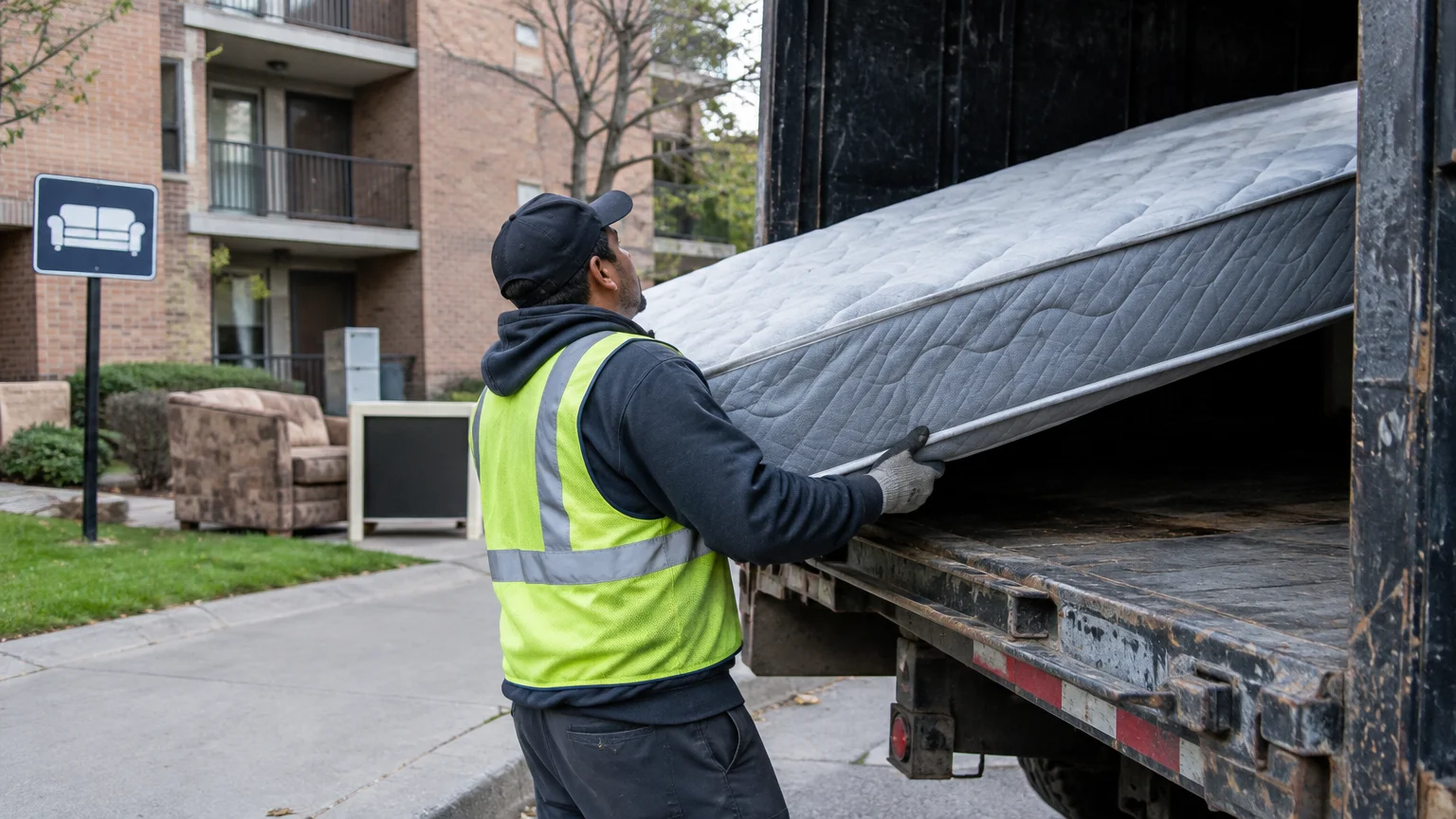
- What are the best ways to dispose of a mattress?
- Can you donate or give away a used mattress?
- How does mattress recycling work?
- Can you leave a mattress out for regular trash collection?
- How should you prepare a mattress for disposal?
- How do you dispose of a mattress with bed bugs or other contamination?
- How can you move a mattress safely?
- When should you hire a mattress removal service?
- What affects the cost of mattress disposal?
- How do you choose the right mattress disposal option?
- Frequently Asked Questions
- Key takeaways
- Conclusion
What are the best ways to dispose of a mattress?
The right mattress disposal choice depends on its condition and local rules. A clean mattress in good shape may be accepted for donation or reuse. A worn mattress may go to a recycler, retailer take-back program, approved local pickup, or junk removal service. Check that the option accepts your mattress before you move it.
Compare the main options
Donation and reuse can keep a safe, clean mattress in use. But each group has its own rules, and some do not take mattresses. Recycling may be an option when a facility accepts the mattress type and condition. A retailer may take an old mattress when it delivers a new one, but the seller sets its own terms.
Hauling can help when a mattress is too worn to donate or hard to move. It may also suit a home cleanout with other large items. New Port Richey Junk Removal can explain what to ask before you arrange a collection. Ask the provider how it handles the mattress and whether reuse or recycling may be possible.
Match the choice to the mattress
Look for tears, deep stains, damp spots, odors, or signs of pests. Then think about whether the mattress is clean and safe for another person. If it is in poor shape, do not offer it for donation. Ask local waste or recycling services what they accept instead.
The mattress type may matter, too. Foam, innerspring, and hybrid mattresses have different materials inside. A facility may take only certain types or sizes. Check the provider’s current information or ask before you go. Keep the mattress indoors until you know where it can go.
Mattress disposal rules may differ between nearby places. Check the service for your address in New Port Richey rather than relying on a neighbor’s plan. This simple check can help prevent a wasted trip or an item left at the curb. The same care is useful for home and business property cleanouts.
Can you donate or give away a used mattress?
You may be able to donate or give away a used mattress if it is clean, dry, safe, and accepted by the new user or group. Many charities follow strict health rules and may refuse mattresses, even when they look usable. Ask first, explain the mattress’s condition, and never leave it at a donation site without approval.
Check condition rules first
Look over both sides, the seams, and the edges. A mattress with bed bugs, mold, strong smells, large stains, exposed springs, or a broken frame should not be passed on. Even a small mark may mean the group will not accept it. A mattress that looks clean may still fail the group’s rules, so check before making plans.
If it appears to be in good shape, take clear photos. Be ready to share its age and condition. Tell the truth about wear, stains, and any known issue. The next person needs enough detail to make a safe choice. Do not call a damaged or stained mattress clean or like new.
Find a suitable reuse option
Try local charities, furniture reuse groups, community groups, or neighborhood giveaway pages. Ask if they accept mattresses and whether they offer pickup. Also ask how they want the mattress covered. Some groups may take a bed frame but not a mattress. Others may accept only certain mattress types.
A group’s online list may not show its latest rules. Ask the group directly before you load the mattress. If it cannot collect the item, find out if drop-off is allowed and where to take it. Do not assume a group can help just because it accepted a similar item in the past.
Giving a mattress to another person also calls for care. Explain its condition and arrange a safe handoff. Do not leave it in an alley, beside a dumpster, or on a sidewalk. An unattended mattress may get wet, attract pests, or become illegal dumping. If no approved group will take it, choose another allowed way to dispose of it.
How does mattress recycling work?
Mattress recycling means separating the mattress into parts that may be used again. A facility may recover metal springs, foam, fabric, or wood, depending on its tools and the mattress design. Not all mattresses can be recycled in every area. Check that the facility accepts your mattress type before arranging drop-off or pickup.
What may be recovered?
An innerspring mattress may contain steel coils, padding, fabric, and wood. A foam mattress may have layers of foam and fabric, but no metal springs. A hybrid mattress combines different materials. Recycling workers may separate these parts and send usable material into other recovery or manufacturing processes.
Each facility has its own process. A wet, moldy, pest-affected, or badly damaged mattress may be turned away. Some sites ask you to remove plastic wrap and bedding first. Others want the mattress kept intact. Do not cut it open or take it apart unless the facility tells you to do so.
Check the facility’s rules
Before you drive to a facility, ask if it takes your mattress size and type. Check its drop-off hours, delivery steps, and preparation rules. Ask whether it takes box springs, too. Some sites accept mattresses only through a special program, not through their regular household recycling service.
People in New Port Richey can check local waste and recycling information before choosing where to take a mattress. New Port Richey Junk Removal can also explain whether mattress removal is an option when the item is too large to move. Recycling can be a good choice when it is available, but do not assume every site accepts mattresses.
If a facility cannot take the item, ask about another approved option. Do not leave a mattress at a gate or beside a recycling bin. Keep it at home until you have a confirmed plan. That can help prevent damage from rain and avoid an unplanned disposal problem.
Can you leave a mattress out for regular trash collection?
Put a mattress out with regular trash only if your waste provider allows it and gives clear instructions. Some places require a booked bulky-item pickup or a visit to a special drop-off site. Check the rules before moving the mattress outdoors. An item that is not approved may be left behind or treated as illegal dumping.
Check collection rules
Read the city or waste provider’s current guidance. Look for rules about large household items, mattresses, and box springs. Find out if you must book a pickup, cover the mattress, or place it in a certain spot. If the rules are not clear, ask the provider before setting it out.
Keep the mattress indoors until the pickup is confirmed. Left outside, it can block a walkway or get soaked by rain. Wind may move it, and insects may gather around it. Do not place it beside a dumpster unless the property manager or waste provider says that is allowed.
Avoid unsafe or illegal dumping
A mattress left in a vacant lot, beside a road, or next to an unapproved bin can cause trouble for neighbors and property owners. It may block access, hold water, or add to an illegal dump site. The person who leaves it may face local consequences. Use a collection method that clearly allows mattresses.
People who live in apartments should ask building management before placing a mattress near shared bins. The building may have a set place for large items or a planned pickup day. Landlords and property managers should check the rules before clearing a vacant unit. A clear plan helps keep the mattress out of hallways and away from the curb until pickup.
Check the rules that apply to that address. A collection plan for one building may not work for another. Ask who handles large items and where they should wait. These steps can help keep shared areas clear and safe.
How should you prepare a mattress for disposal?
Prepare a mattress by clearing the path, taking off the bedding, and protecting it during handling. Use a mattress bag or strong plastic cover if the receiving service asks for one. Check the preparation rules before wrapping it. A charity or recycler may need to inspect the mattress first.
Protect it during transport
Remove sheets, pillows, and other bedding. Keep the mattress dry and away from pets or household mess. A mattress bag can help keep dust and water off while you move it. Choose a cover that fits and close it well. Do not seal a wet mattress in plastic for a long time.
Ask the charity or recycling site whether the mattress should be wrapped. Some providers want a cover, while others need to see the mattress first. Do not place a label or cover over a stain or damaged area. Tell the provider about any known problem before loading the item.
If the mattress is waiting for pickup, keep it in a dry place. Do not leave it outside before the collection is confirmed. A wet mattress may no longer be accepted for donation or recycling. Keep children and pets away from the item while it is being stored or moved.
Plan the route out of the home
Measure narrow halls, stairs, doorways, and elevator openings before you move the mattress. Clear small items from the path and make sure doors can stay open safely. Keep children and pets away while people carry the mattress. If it will not turn through a doorway, do not force it or risk damage to the home.
Plan for other items that need to leave, too. A refrigerator or another appliance may need a separate pickup and preparation plan. Do not assume one service takes every item. Tell the provider about furniture, appliances, and other junk so it can say what it accepts and how to prepare each item.
A simple plan helps during residential cleanouts and work at rental properties. Decide where the mattress will go before moving it from the room. Check whether the route passes through shared halls or busy work areas. Keep those spaces clear so other people can pass safely.
How do you dispose of a mattress with bed bugs or other contamination?
A mattress with bed bugs, mold, bodily fluids, or another harmful mess needs careful handling. Keep it contained, do not drag it through the home, and ask the waste provider or removal service what to do. Tell the provider about the problem before moving the mattress. It can then explain what it accepts and how to prepare it.
Keep the problem contained
Do not donate or give away a mattress that may carry pests or create a health risk. If you think it has bed bugs, do not carry it uncovered through shared halls. A sealed mattress cover may help contain it, but follow advice from a pest expert or the receiving provider. Do not use a treatment that could make the mattress unsafe for workers.
For mold or dampness, do not shake or cut the mattress. Keep people and pets away from the affected area. If the problem is serious, ask a qualified local expert how to handle it before moving it. A junk removal crew may not offer pest treatment or hazardous cleanup, so check what the service does first.
Tell the provider before collection
Describe the issue in clear words. Say if the mattress has bed bugs, visible mold, a strong smell, or a bodily-fluid stain. Ask if the provider will take it and whether it needs special wrapping. If the service cannot accept it, ask which local waste office can give the right instructions.
Removing a surface stain does not always make a mattress safe to donate. A cleaner may not reach deep inside, and strong products can harm the material. Urine stain removal from a mattress may leave a smell or mark. If the mattress is still stained, wet, or unfit for reuse, choose a disposal option that accepts its condition.
Be open about the problem when you speak with any service. This includes a local waste program, a recycler, or a hauling company. Do not hide the issue under a cover or wait until the crew arrives to mention it. Clear details help everyone plan a safer collection.
How can you move a mattress safely?
Move a mattress with enough help, a clear path, and a plan for stairs and tight turns. Bend your knees, keep the load close, and stop if it feels too heavy or blocks your view. A large or awkward mattress may be safer for trained haulers, especially on stairs or in narrow halls.
Use safe lifting habits
Ask another adult to help with a bulky mattress. Agree on who will lead and when to lift, turn, and lower it. Move slowly and keep your back in a comfortable position. Do not twist while carrying. Take a break if you need one, and do not try to carry a mattress alone.
Move rugs, shoes, boxes, and other things out of the way. Make sure the place where you will set the mattress is clear. Wear gloves if the mattress is dirty or has rough edges. If it is wet, contaminated, or badly damaged, stop and ask the receiving service for safe steps.
Do not rush through a stairway or doorway. A mattress can catch on a wall or block your view. Take time to turn it with your helper. If you cannot move it without strain or damage, leave it in place and arrange help.
Secure it if you transport it yourself
Use a vehicle that can carry the mattress safely and within local road rules. Do not let it block the driver’s view, hang loose, or cover lights or plates. Use suitable straps to hold it firmly. Follow the vehicle maker’s guidance and local rules. Do not rely on loose rope or someone holding the mattress by hand.
A mattress on a roof can catch wind, shift, or fall. If your vehicle is not made for roof loads, or the mattress will not stay secure, choose a delivery or hauling service. Check the drop-off site’s instructions before leaving home. A mattress that gets wet or damaged on the way may no longer be accepted for reuse or recycling.
Make sure the route and drop-off plan are ready before loading. A facility may have set hours or a required way to unload. Ask about these steps before you leave. If you cannot transport the mattress safely, you do not need to do it yourself; arrange an approved pickup instead.
When should you hire a mattress removal service?
A mattress removal service may help when the item is heavy, access is hard, transport is not available, or several large items need to go. It can save you from carrying a mattress down stairs or finding a drop-off site. Ask what the service accepts and how it handles reuse, recycling, and disposal.
Consider the whole job
Think about the route from the room to the pickup place. Narrow stairs, long halls, elevators, and tight doors can make removal harder. The mattress size, condition, and any other items matter, too. A household junk service may be able to take a couch, dresser, or bed frame during the same visit if it accepts those items.
Tell the service if the mattress has stains or may have pests. Share this before the visit, not when the crew arrives. Explain whether the mattress is upstairs or behind a locked gate. Clear details help the provider plan the job and avoid a missed collection.
You may not need a professional if the mattress is clean, easy to move, and you have a safe way to transport it. You can check local rules and ask a recycler or charity yourself. A removal service is more useful when the route is hard, you lack a suitable vehicle, or several bulky items are part of the job.
Ask how it will be handled
A good provider should explain what it accepts and what happens next. Ask if the mattress may go to reuse, recycling, or an approved disposal site. Do not assume every item will be recycled. The final route depends on the mattress’s condition and the rules of local facilities.
When comparing mattress removal services, check more than convenience. Ask whether the provider serves your area, can handle stairs, and accepts related furniture. New Port Richey Junk Removal can answer questions about its process and what details to share before collection. Clear the pickup area and follow the provider’s instructions.
It can help to make a short list before you ask for service. Include the mattress type, its condition, where it is in the home, and any other items. If access is limited, mention that as well. These details help the provider tell you whether it can do the work.
What affects the cost of mattress disposal?
Mattress disposal costs can depend on the mattress size, its condition, the distance to an approved site, and how easy it is to reach. Stairs, long carries, contamination, and other furniture can add to the work. The provider confirms the final cost on a quote after reviewing the job details. There is no single cost that fits every pickup.
Consider the work involved
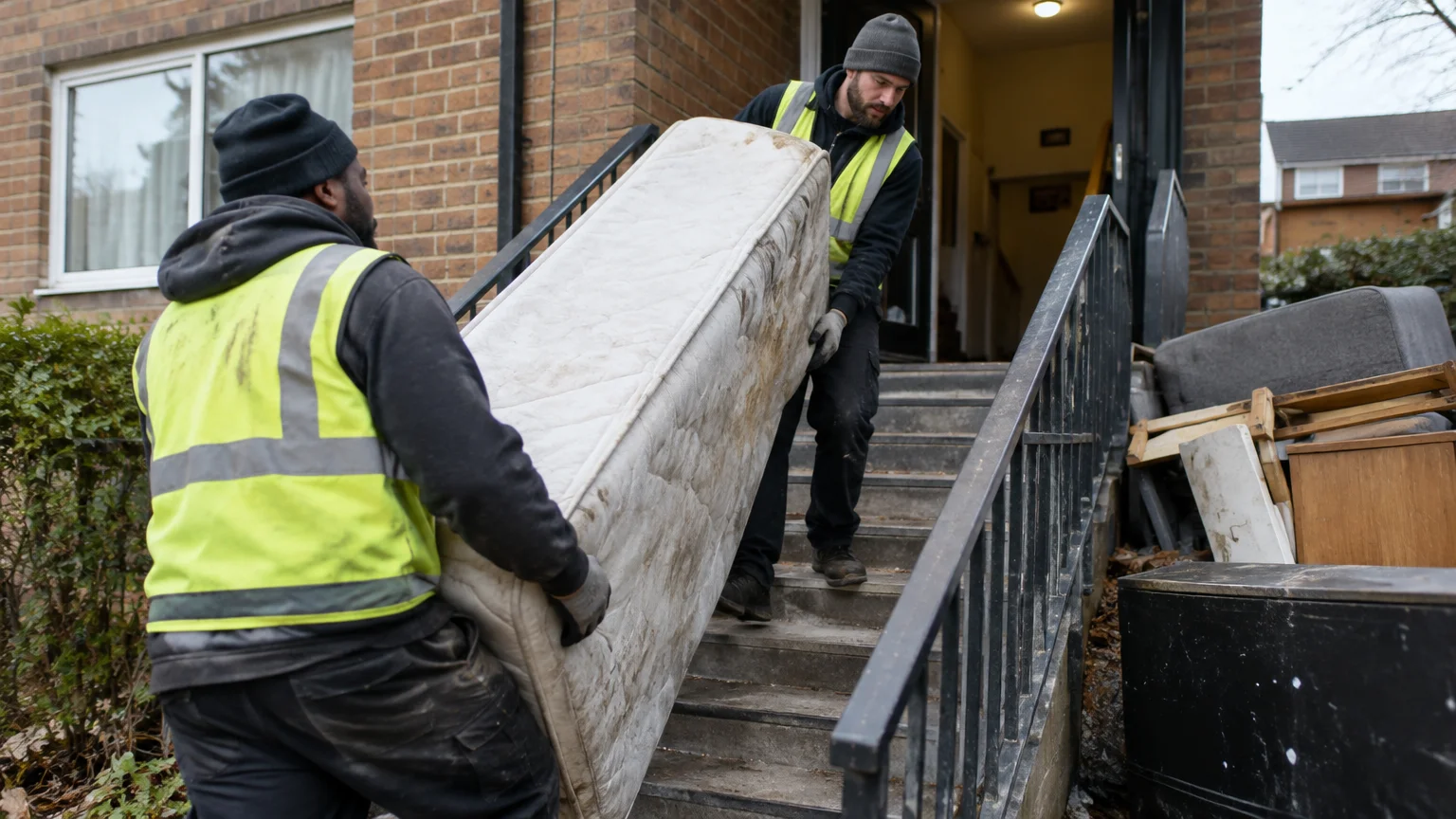
A mattress near an easy ground-floor exit may take less handling than one upstairs with narrow stairs. A wet or pest-affected mattress may need extra care, or a regular service may not accept it. Transport needs can vary, too. A nearby recycling site may not take every mattress type, which can change the plan.
The number and type of items matter. Taking one mattress is a different job from clearing a bedroom with a bed frame, dresser, and other household junk. A broken piece of furniture may need a different plan than a clean mattress. Share a clear item list and access details when you ask for a quote.
Do not leave out stains, dampness, or signs of pests. These details can affect what the provider can do. Also mention stairs, long walks to the pickup spot, or a locked gate. Clear information helps the provider review the full job before confirming the final cost on a quote.
Compare options fairly
Compare what each choice includes. A retailer take-back program may depend on delivery of a new mattress. A donation group may have strict condition rules. A recycler may require you to drop off the item, while a hauling service may collect it from inside the home if that is offered.
Ask what you need to do before pickup. Confirm the collection place, which items are accepted, and how the mattress should be prepared. If a provider gives a quote, check that it reflects the mattress, access, and other items you described. This helps you compare similar services instead of making a choice from missing details.
The best option is not always the one that sounds easiest at first. A donation may not work if the group cannot accept the mattress. A recycler may be far away or may not take that mattress type. Compare the steps involved and choose a route you can complete safely and in line with local rules.
How do you choose the right mattress disposal option?
Choose a mattress disposal option by checking its condition, confirming local rules, and deciding whether you can move it safely. Try reuse only when the mattress is clean and accepted. Check recycling and retailer programs next. If those choices do not work, use an approved bulky-item pickup or removal service.
Follow a simple decision process
- Inspect the mattress. Look for damp spots, stains, pests, tears, and broken parts. Describe its condition honestly.
- Check reuse options. Ask charities or community groups if they accept that type and condition.
- Confirm recycling rules. Ask a facility what it takes and how to prepare the mattress.
- Review local collection rules. Find out if you need a booked pickup or special drop-off.
- Choose safe transport. Get enough help and use a suitable vehicle, or arrange an approved pickup.
Do not move the mattress until the receiving place confirms that it can take it. This matters when the item is stained, wet, oversized, or affected by pests. Keep any instructions close by on pickup day. If the first option falls through, ask the local provider about another approved route.
Do not leave the mattress outdoors while you wait for an answer. Rain or dirt may make a clean mattress unsuitable for reuse. An unapproved item may also block a path or be left behind. Keep it indoors until the plan is set.
Make the plan fit the home
A person with a clean mattress and a suitable vehicle may be able to arrange a local drop-off. Someone in an apartment with narrow stairs or no transport may need pickup help. A landlord clearing more than one room may want to plan mattress and furniture removal together. Choose a method that follows local rules and can be done safely.
The same steps work in New Port Richey and elsewhere: check the mattress, confirm who will accept it, and plan the move. New Port Richey Junk Removal can explain its mattress removal process and what details to share. Keep the mattress dry and contained while you wait.
If it is not accepted for reuse, recycling, or pickup, ask the local waste provider for more guidance. Rules can vary by place and by service. Check the rules for the address where the mattress is stored. A confirmed plan is safer than leaving it at the curb and hoping it will be taken.
Frequently Asked Questions
How can someone get rid of an old mattress?
First, check whether the mattress is clean enough for donation. Then ask local charities or reuse groups if they accept it. If not, contact a recycler, retailer, waste provider, or hauling service. Check acceptance and preparation rules before moving it, and never leave it at a donation site or curb without approval.
Can a stained mattress be donated?
Many groups refuse stained mattresses because they must protect the next user. Ask the organization about its rules and describe the stain honestly. Cleaning may not remove deep marks or smells. If the mattress remains stained, use a recycling or disposal option that accepts its condition.
How do you handle urine stains on a mattress before disposal?
Blot fresh moisture without rubbing it deeper, and follow the mattress maker’s care directions. Do not soak the material or mix cleaning products. Cleaning may not remove a deep stain or smell. If the mattress is still damp or not fit for reuse, tell the disposal provider before pickup.
Can a mattress with bed bugs be put out for pickup?
Do not set it out until the waste provider or removal service confirms its rules. Keep it contained and do not drag it through shared areas. Tell the provider about the suspected pests. It may refuse the mattress or ask for special wrapping. Follow local instructions instead of giving it away or leaving it outside.
Does every recycling center accept mattresses?
No. A center may take only certain mattress types, sizes, or conditions, and some do not take mattresses at all. Check its current rules before driving there. Ask whether it takes box springs and whether the mattress needs a cover. If it cannot accept the item, ask about another approved local choice.
Key takeaways
- Check the mattress first. A clean, dry mattress may have reuse options; a damaged or contaminated one needs another route.
- Confirm acceptance before moving it. Charities, recyclers, retailers, and waste providers follow different rules.
- Plan a safe path. Clear halls and stairs, get enough help, and secure the mattress during transport.
- Tell providers about problems. Stains, moisture, pests, and hard access can affect what they accept.
- Keep it off unapproved curbs. Use a confirmed pickup, drop-off, or hauling plan.
Conclusion
Mattress disposal is easier when you check the mattress, local rules, and transport before moving it. Donation may work for a clean mattress, while recycling or approved hauling may suit one that cannot be reused. Keep stained or pest-affected items contained, and confirm each collection plan before setting a mattress outside.
For help with mattress removal, Contact us to discuss the item and pickup details. More information about New Port Richey Junk Removal is available here.
If you are not sure what you are dealing with, it is worth having someone look at it before it turns into a bigger job. Get in touch with New Port Richey Junk Removal today and we will tell you where you stand.